GODencounters is a movement of young adults who are wholeheartedly seeking a 24/7 experience of GOD, recklessly living for His renown


Showing posts with label Worship. Show all posts

May 16, 2013

Solo Acts or Part of a Team? by Andy McDonald


Sometimes it seems the American dream is "I can do anything, achieve anything, build anything on my own."  That is the lone-ranger-pioneer-spirit and it may in effect make us believe that we can do everything alone—"pull yourself up by your bootstraps" stuff.

But the truth is that no matter how good we are we really can't do it all alone. A Chinese proverb says, "Behind an able person there are always other able people." In another eastern work with which you are familiar, Ecclesiastes, chapter 4:9-10 says, "Two are better than one, because they have a good return for their work: If one falls down, his friend can help him up. But pity the man who falls and has no one to help him up!"

Team work is at the heart of great achievement. We would be hard pressed to think of one act of genuine significance in the history of humankind that was performed by a lone human being.  Even Christ on the cross was part of the team plan of the trinity, and His plan for gospel to the world involved a team called the church.

Down deep we know that team work is the way to achieve something big, yet we still try and go it alone.  Why?

John Maxwell shares three of the many reasons.

Ego—we don't like to admit we can't do it all. Andrew Carnegie once said, "It marks a big step in your development when you come to realize that other people can help you do a better job than you could do alone.

Insecurity—I want to maintain control or I'm afraid of being replaced by someone more capable.

Naiveté—John Gehegan, president of US Business Advisors keeps a sign on his desk that says,  "If I had it to do all over again, I'd get help."

Nobody is a whole team. None of us is a whole independent, self-sufficient, super, capable, all-powerful, hotshot; let's quit acting like we are.  Life is lonely enough without playing that silly role. The game is over. Let's link up.

Rethink going it alone.  Take some time to consider how you can become more of team player—with family, work, spiritual development.  Think about whom you should be working with to achieve what God is calling you to do.

Remember Ecclesiastes 4:9-10 "Two are better than one, because they have a good return for their work: If one falls down, his friend can help him up. But pity the man who falls and has no one to help him up!"

ENCOUNTER: How does "team work" play into your Christian walk?  Where are you doing things alone in your spiritual growth?  How might "linking up" impact your journey?

February 1, 2013

Madras by Bill Ashlock

I left Madras three days ago yet a continuing scene replays itself in my mind. No, I do not see the unending maze of nameless streets that constitutes the city itself, or the chaos masking itself as city traffic, or the searing heat of early summer. Even the dust quickly faded into a trivial fact. What I recall is the continuous variations of temple worship that seem to mark every third corner.

Madras is a spiritual town. Churches are plentiful. Hindu Temples well attended. Muslim Mosques accepted. Local papers carry spiritual guidance columns as well as regular editorials on various God related subjects. There is no doubt that God is alive and present, at least if the actions of Madras residents are counted as votes.

The reason that Madras keeps replaying itself is not simply because there are many places of worship. On a per-capita basis I am sure that our small English village has as many worship venues as Madras. The difference comes in the frequency that I find places full to overflowing, high to virtually none, times that activity is noted, always to once a week which is only broken by the occasional wedding or funeral scheduled at odd hours, and knowledge of those passing by. Please do not ask me about the service going on at the church on High Street in Walton-on Thames; I am not even sure if the church is Anglican or Catholic. In contrast, each house of worship has a story and as often as not the person can tell or know what is going on. If not, they are happy to stop and ask!

I walk away from Madras more committed to worship than ever before. I do not want to be one of masses who others describe as being willing to "dig a fork into the pie but are too lazy to raise it to their mouth." (Proverbs 19.25) I was to be someone who could represent Madras! Worshipping God at all times of the day. Worshipping God as if nothing else matters; because it does not!

ENCOUNTER:  How might you mold your life so that it would be one of ceaseless worship? What are the things that matter most to you today?

September 29, 2012

The Secret is Out! by Jeff Gang

WORD: “To you, O king, as you lay in bed, came thoughts of what would be hereafter, and the revealer of mysteries disclosed to you what is to be. - “Daniel 2:29

THOUGHT: Is it me or am I the only one who doesn’t like email forwards? It’s annoying. Listen people. I don’t read them. I can’t find the delete key fast enough. Please stop sending them to me. However, I’ve come to realize that there is one forward in life I can’t ignore—I can’t delete because it won’t go away. It’s been sent down through the ages. It’s been passed on from generation to generation. From decade to decade. From century to century. Through the millennia it comes down. The message is clear. It reads as follows:

Subject: > Fwd: >Fw: >FWD: >Fwd: The Secret is Out! (you gotta read this!)!?!

<< In a message dated “before the dawn of time”

00:00:00 from somewhere in the universe,

[e-mail

>address:

>writes:

> 

><< 

>THE SECRET IS OUT This was written by the

Creator

>The kingdom of heavens…

> 

>Listen!

>I am the revealer of secrets.

>I am the revealer of great mysteries from

before time immortal.

>I know great things!

> 

> 

>I can’t keep it inside, I can’t keep this secret. It’s

>too amazing.

>It’s to incredible. It’s to wonderful! I

>am bursting to tell you. I will die to tell you.

> 

> 

>Here it is: Are you ready?

>I am the one who formed your inward parts;

> I knit you together in your mother’s womb.

>you are wonderfully made.

> 

>My ways are not hidden from you,

>you were made in secret

>intricately woven in the depths of the earth.

>But my eyes beheld your unformed substance.

> 

>And listen! In my book were written

> all the days that were formed for you,

>when none of them as yet existed.

> 

>I know these thoughts blow your mind. I know

>how boggling this secret is to your thoughts,

>how vast is the sum total of what I am revealing!

> 

>Try to count them-but you can’t—they are more

>than the sand; you’ll come to the end of every grain

>-I am still with you!

> 

> 

>I am God.

> 

> 

>Now if you are amazed by this Revealer of Secrets,

>forward this to all the people in your address book

> and the person who sent

>this to you.

> >>

PRAYER: O Reveler of Secrets, I worship you today and everyday. You are Bigger than me. You are Greater than my sum total. I bow before you in awe and wonder. I come before you with praise. You who have revealed my destiny before I was. Because You Were and You Are.

Amen.

ENCOUNTER:

The secret is out. What difference is it going to make in your life today?

How are you going to do things differently today because of this secret revealed before the dawn of time?

What difference will this secret make in your life the next time you worship (alone or with people)?

Why is this secret so important to living a life of God encounters?

September 19, 2012

Going Old School: God's Return Policy


As we've seen throughout our study of Leviticus, the Israelites were required to give or dedicate things to the Lord. For example, the first portion of their harvests, their firstborn sons and animals, and a tithe when their wealth increased. Some of the Israelites, just like some Christians today, wanted to go above and beyond what was required and give even more to the Lord. Sometimes they would dedicate themselves, another family member, donate land, give additional animals, and so on to God. And rather than actually GIVE something to God, they could donate the money that the gift was worth (as determined by the priest).

But the Israelites, like us, were human. Sometimes one of them might make a vow or dedication that was beyond their means, maybe a show of bravado or "look how much I gave to the Lord!" (We see a lot of that in Jesus' time.) In Leviticus 27, God seeks to discourage that behavior. But, because He recognizes that sometimes we humans make rash decisions, He instituted a return policy for offerings.

First of all, God forbids swapping out offerings. In vv. 9-10, God basically says that if you give an animal to Him as an offering, you can't just substitute another animal for it if you realized later on that you need the original animal. You could give another animal, but both animals would be considered holy and had to be treated as such. God was teaching the people that if they made a commitment to Him, they shouldn't go back on their promise even if things got tough. God did allow people dedicated to Him to be purchased back with a 20% penalty. So often today we promise to give 10% of our income to God, but then some unexpected bill comes up or for some reason we just "can't" give a tithe this month. God expects us to keep our promises to Him, even if it leads to short term pain. But remember, God also promises to provide for those who remain faithful!

People could also donate land, just as people today do. If an Israelite donated a piece of land to the Lord in, say, a will, the Lord gives provisions for doing that in vv. 14-25. As you read these verses, you'll notice that the land donations especially revolve around the Year of Jubilee. Land value depreciated the closer it got until the next Year of Jubilee, and at that time the land must be returned to the original owner or his decedents. But if the family does not want the land back, or it was sold to another people, at the Year of Jubilee the field becomes holy, and it will be the property of the priests to keep for the Lord. This is another wonderful provision God set up that we no longer keep today.

In Leviticus 27:33, God gives a final thought on tithe and offering. Many of the principles God has outlined in Leviticus for His people were not intended to be edicts that had to be followed OR ELSE. Instead, God was encouraging the people to give from the heart, to have their outward gifts match their inward feelings. If a person gives a big gift but is inwardly upset or feels forced into it, he or she is only giving an offering out of obligation, which is not what God is asking for. Paul puts it like this, "You must each decide in your heart how much to give. And don’t give reluctantly or in response to pressure. 'For God loves a person who gives cheerfully.' And God will generously provide all you need. Then you will always have everything you need and plenty left over to share with others." (2: Cor. 9:7-8)

As we come to a close in our study on Leviticus, what has it really been all about? Is it just a book of rules given to the Israelites that are meaningless of us today? I would argue that all the commands in Leviticus that God gave the people in the wilderness help us to really learn about about God's nature and character. Sure, Leviticus might seem irrelevant in our modern, iPhone, text messaging, high-speed world, but when you take that deeper look, as we've done, you realize that it IS still relevant. God is the same God today as He was at Sinai, and the principles for living He gave back then remain as true today. As Jesus says, "Heaven and earth will disappear, but My Words will never disappear." (Matt. 24:35 & Luke 21:33). People and societies come and go, but if we choose to follow our timeless, unchanging God, we must find ways to apply His principles in our lives. We must always remember that:
"Jesus Christ is the same yesterday, today, and forever." (Heb. 13:8)
Encounter: How do you worship God in your everyday life, by just following the rules, or by inviting Him to be a part of everything you do?  Have you thanked Him for being involved (even when you didn't think you wanted Him to be)?

April 12, 2012

Going Old School: Sex Ed by God


As we’ve walked through Leviticus, we’ve learned a lot about what it means to live for God.  More than that, we’ve learned how living well is good for us, too.  What we eat, our bathing habits, how to take care of ourselves (and others) when we’re sick, how to avoid getting sicker, all very important to a good life!

There is another piece to living our lives to the fullest that God talks with us about in Leviticus: Sex.  In Leviticus 18, God lays out pretty plainly and clearly safe, proper, and healthy sexual practices for us.

God begins this chapter (vv. 1-5) by encouraging His people to remain focused on Him and not fall into the pagan rituals they encountered as slaves in Egypt or that they saw around them in the Canaanites.  As the Israelites moved around in the wilderness and encountered these cultures, God knew how easy it would be for the people to forget about Him and the life He was trying to build for them and slip back into paganism.  The societies and religions surrounding the Israelites were focused on worldly desires and the pleasing of self above all, especially through sex and drunkenness.

He continues His discussion of forbidden sexual practices by forbidding marriage and intercourse with a close relative (vv. 6-18).  We realize today that this was to prevent incest and the serious health problems that can come from it.  More than that, God knew the consequences and destructive effect improper sexual relations would have within a family.  Think about the destruction that happens when a child is sexually molested by a relative.  God knows sexual practices between family members tears families apart.

God also has prohibitions against adultery (v. 20), offering child sacrifices (v. 21), homosexuality (v. 22), and bestiality (v. 23).  These were common practices in the pagan religions and cultures of the day, and you can see why God would deal harshly with those who committed these disgusting acts.  Additionally, the practices can lead to disease, deformity, and death.  They destroy families and society because they have such low regard for the value of a person (and that person’s self-esteem).  Modern society takes some of these things very lightly, even going so far as to condemn those who don’t accept them (more on this later).  But these practices are still as much a sin today as they were in the Wilderness, and just as unacceptable.

So what is the life lesson God was trying to teach His people?  God was encouraging the Israelites to keep themselves pure since they were His representatives to the world.  He knew there would be pressure the be absorbed into the surrounding culture and narcissistic religions, and He was moving to protect His people.  Likewise today we may feel pressure to conform to the “accepted” way of life in modern society, but giving into it would:
a) create confusion as to which side we should be an and
b) eliminate any impact we could have for God.  
Just as God instructed the Israelites, we too must resist modern culture’s attempt to mold our thoughts and actions so that we can be the examples for God we’re called to be.  We were created in His image, after all!

Encounter: Do you sometimes feel pressure from society to act a certain way or do certain things to be accepted?  Did you try and deal with it on your own or did you ask Jesus for help?


February 22, 2012

Going Old School: You Are What You Eat

We’ve all heard the phrase “You are what you eat.”  After reading Leviticus 11, you begin to realize that maybe that phrase has been around a little longer than you think.
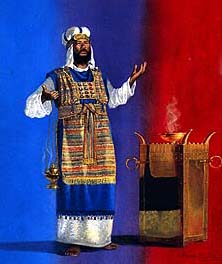
God was teaching His people in the wilderness that just because He has given us the freedom to do whatever we want doesn’t mean that we should.  God wanted His people to know which foods should be considered clean and which should be considered unclean (11:47).  God had a few good reasons for giving the people this restricted diet.

  1. To ensure His people stayed healthy.  The forbidden foods were usually scavenging animals that fed on animals that were already dead, which means that disease could be transmitted through them.
  2. God wanted to visibly distinguish Israel from other nations.  The pig, for example, was a common sacrifice of pagan nations.
  3. God wanted to avoid objectionable associations.  For example, the creatures that crawled along the ground make one think of serpents, which is often associated with sin (think the Garden of Eden).

God was fairly direct and detailed with foods the people could eat, even going so far as to forbid them to touch some of the unclean animals (11:8).  God wanted His people to be completely separated from the things He had forbidden because He knew what the consequences could be.  Often times today we find ourselves in similar situations. 

How many times do we talk ourselves into something with the rationalization that we are technically keeping a commandment?  God was trying to protect His people (and us today) from getting into situations where they would be tempted to sin, situations where they might “technically” be innocent but really….they had sinned.

As we’ve seen in the previous chapters, God is also teaching us how to worship, and here God is showing His people the importance of not merely showing up, but being prepared to worship!  God goes over quite a few instances where people may have sinned (even accidentally) and needed to be made right with Him (“cleansed”) before they could rejoin the community in worship.  The same applies to us today.  We cannot just live any way we want all week long and simply “show up” in God’s presence for an hour each week.  No!  We should prepare ourselves by confessing our sins to God, making ourselves right with Him (and anyone we’ve wronged, if possible), and live with anticipation of the joy that comes from being in God’s presence with other believers.

As you can see, there is a lot more in this chapter than just a list of food the people could and couldn’t eat.  God sums it up for us:

44 For I am the Lord your God. You must consecrate yourselves and be holy, because I am holy. So do not defile yourselves with any of these small animals that scurry along the ground. 45 For I, the Lord, am the one who brought you up from the land of Egypt, that I might be your God. Therefore, you must be holy because I am holy.

Right there God is giving us a key understanding of all the rules and regulations in Leviticus.  God wants us, as His people, to be holy—set apart, different, unique—because He is!  God knows that we only have two options in this world: To be set apart and holy, or to make compromises and become corrupt.

God wasn’t just giving instructions to the Israelites in the wilderness, He is also calling us, as Christians, to be holy (I Peter 1:15).  Just like the wanderers in the desert, we should strive to remain spiritually separate from the enticements of the world, even though we encounter them every day.  We should be examples to those around us, not compromise and try and “fit in” or “be cool” with them. 

It’s not easy, and God knows that!  God doesn’t expect us to go it alone, He is there with us every step of the way.  And, because of Christ’s sacrifice for us, we “are holy and blameless as you stand before him without a single fault.” (Colossians  1:22).  With Christ, we can really and truly live IN the world and not be OF the world!

Encounter: How can you live for God without walling yourself off from the world? 


Some references borrowed from the Life Application Study Bible (NLT) 2nd Edition published by Tyndale House Publishers.

February 8, 2012

Going Old School: We Are Priests to the World

All right, we’ve taken a look at the different sacrifices & offerings the people made to God.  As you recall, God had some pretty specific instructions and which offerings were required when (some as thanks, others because someone sinned against God or someone else).  God also gave very detailed instructions to the priests about what to do with the offerings, how to treat them, and how to be a person’s advocate to God.

But who are the priests?  What does it take to become a priest?  Let’s dive back into Leviticus and find out!
1 Then the Lord said to Moses, 2 “Bring Aaron and his sons, along with their sacred garments, the anointing oil, the bull for the sin offering, the two rams, and the basket of bread made without yeast, 3 and call the entire community of Israel together at the entrance of the Tabernacle.”
While all of the Levites were set aside as servants for the Lord, only Aaron and his descendants could be priests.  Aaron and his sons had the honor and responsibility of performing the sacrifices.  Leviticus 8 & 9 details the priestly ordination for Aaron and his sons, which was performed in front of the entire community.  Here’s how it went:
  1. Aaron & his sons were washed with water (8:6)
  2. Clothed in the ceremonial priestly garments (8:7-9, 13)
  3. Anointed with oil (8:12)
  4. They placed their hands on a young bull as it was killed for sacrifice (8:14-15) and two rams as they were killed for sacrifice (8:18-23)
All this showed the people that holiness comes from God ALONE, not just from being a priest.  That is a lesson many of us need to learn today, too.  We aren’t “better” because we’re active in the church, have a title or position, or a good reputation.  No matter how great our reputation is or how long we’ve been actively involved at church (or even been a pastor!) we must depend on God for spiritual vitality!

The next natural question in all of this is why priests were needed in Israel at all?  Back in Exodus 19:6, God called all of the Israelites to be a NATION of priests.  The idea was that they would be holy and relate to God and share that with the nations around them.  If you look at where Israel is located on the map, all of the major trade routes of the time went through their territory, giving them a grand opportunity to witness to the world!  But we’re human, and we’re sinful, and since Adam we’ve needed a mediator with God.  For the Israelites it was the priests, who offered the sacrifices to on a person’s behalf that they might be made right with God.  For us today, Jesus Himself is our mediator, and as we confess our sins He makes us right with God.  The priestly system (both past and present) was a concession to fallen man’s inability to relate to God individually or corporately.  When Christ returns and we are fully restored to God, we will no longer need a concession for our fallen nature.

After the priests were ordained and Aaron offered his first sacrifice for the people, God Himself sent the fire to consume the sacrifice, so that the people would know that God approved of Aaron’s offering (9:24).  When the people saw what God had done, they cried out in…fear?  No!  They cried out in JOY!  They cried out and then fell to worship their awesome and loving God!

Often times today we think that God doesn’t give mighty displays like that any more.  We question whether God actually exists  because we don’t see heavenly fire consume anything, the sea parting, a pillar of cloud/fire anywhere.  How many of us have asked God if He’s really up there?

But God IS at work in today’s world just as much as He was with the Israelites in the wilderness.  When a group of believers is actively working and seeking Him, He doesn’t need to do mighty physical acts.  Instead, He works to change the world THROUGH His believers.  YOU are God’s mighty display of power!  When you realize that, you’ll see God’s acts of love all around you.

I want to close with two questions.  It’s a tradition that a dear friend of mind, Stephanie Johnson, had some crazy high schoolers do before a meeting, and I think it fits in nicely with what God is trying to teach us in Leviticus.

Encounter: Who was Jesus to you today?  Who were you Jesus to today?

January 31, 2012

Invisible by Tim Goff

WORD: “Now to the King eternal, immortal, invisible, the only God, be honor and glory for ever and ever. Amen.” 1 Timothy 1:17, NIV.

THOUGHT: “Now faith is being sure of what we hope for and certain of what we do not see.” Hebrews 11:1, NIV. Yes Lord I am reading this but… but that is sooooo NOT like me. I want to see, hear and then believe! I want to see your glory and see your face and see the way you smile with grace. I want to hear your voice, catch the tone and inflection of what you are saying and draw from THIS my trust. But you have chosen to make yourself “invisible.”

Jesus, you spoke about the importance of having eyes to see and ears to hear. Well do you want me to see you and hear your voice? I am waiting…. Lord you want me to follow you but how can I follow if I can not see and hear you? My senses are all I have to know what is going on around me. So what shall it be Lord? What good are eyes and ears if I can not see and hear you? Yet — You — healed the blind and gave them sight. Now I am really confused. Lord, I am beginning to understand that You must have a very different plan than what I would expect.

Open the eyes of my heart Lord and open the ears of my soul so that I may experience You Lord, for nothing I have, neither my eyes, ears, touch, smell, nor taste can do it for me. I can’t get in touch or hear You with my abilities. Therefore if I am to have fellowship with the Invisible — then it must be true that You meet your people by some other way. Is that what revelation is?

Okay I am starting to get it Lord. I need - to forget my expectations and abilities — and open my heart to inspiration from You. So Lord, since I can not seek You through my senses does this mean that I can not seek You at all; much less find You? After all how could I find You without my senses, for that is all I have. If so, then how does this all happen?

Is it possible that my worship of You is not so much about me seeking You but is rather my response to what You are already putting in my heart? Wow this is getting interesting

Lord (and heavy). If this is true, then my worship, prayers, songs and devotions are a free response to a heart-calling. You must have put there in the first place — Which means that since I cannot seek an invisible God then You are the One seeking me — and — and this means that all my spiritual strength and all my understanding of eternal things comes from You in the first place!! Whoa.

Yes Lord, then open the eyes of my heart and open the ears of my soul, that I can sense Your presence and know You instead of all the images, sounds, smells, tastes and feelings I have so that I might know You. O that my response could be a reflection without fingerprints or smudges, of what You are allowing me to see in my heart about You. Thank You Lord for putting this love in my heart (and being invisible).

ENCOUNTER: What do you sense? [beyond your senses]

April 17, 2009

GODencounters: Pursuing a 24/7 Experience of Jesus

Looking for a discipleship guide for your young adults? Eager to deepen the devotion of new generations to Jesus? GODencounters may be just what you are looking for.

GODencounters: Pursuing a 24/7 Experience of Jesus, which calls young adults into a deeper life with Christ, is long overdue. Young adults have long needed a voice that spoke directly to their spiritual, emotional, and social needs. Unique and out-of-the-ordinary, GODencounters will reach hearts where other printed books may not. Crafted by young adults and those who minister with them, GODencounters is different, interactive, thought provoking, introspective, and practical. I’m certain young adults who experience Jesus through GODencounters will be blessed in extraordinary ways.
- Bill Wood, Director, Atlantic Union Conference Youth & Young Adult Ministries

GODencounters: Pursuing a 24/7 Experience of Jesus explores the heart of a young adult movement recklessly living for GOD's renown. Authors Lynell LaMountain, Shayna Bailey, and A. Allan Martin, anchor an eclectic constellation of heartfelt entries which share an honest hunger to live in GOD's presence continually. Just released by Pacific Press, GODencounters is now available online or at your local Adventist Book Center.

GODencounters: Pursuing a 24/7 Experience of Jesus offers new generations a holy invitation to live life in His presence. It is raw and honest about this life, offering real experiences and real encouragement from other GODfollowers. Young adults are not the only ones who will be transformed. I highly recommend GODencounters!
- James Black, Director, North American Division Youth & Young Adult Ministries [YPAC]

Available for bulk orders and special pricing, GODencounters, makes a great graduation or baptismal gift. It is a provocative discipleship study guide for individuals and young adult groups. Use it as a spiritual conversation starter with new generations, especially those who have left their faith or have yet to meet Jesus. Pick up GODencounters today, http://www.adventistbookcenter.com/GODencounters
For more information on bulk orders or special event pricing, contact Sharon Lewis at Pacific Press, 208-465-2544.